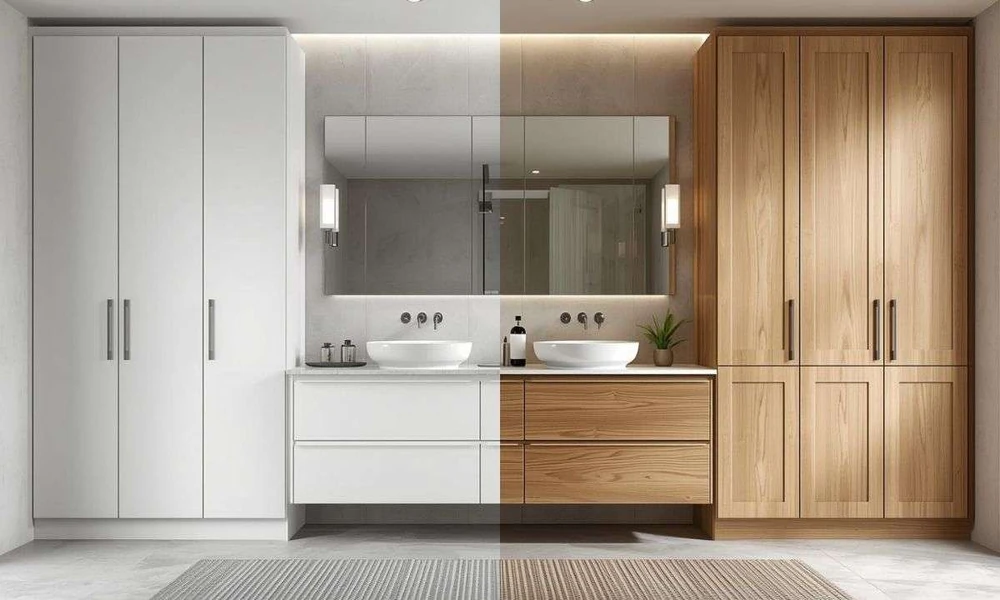
Warmth, texture, and timeless appeal: these are the reasons design lovers keep going back to wood finishes, even in the most modern of bathrooms. But in a world where MDF, glossy lacquer, and even plastic compete for your attention (and dollars), you might wonder, do wood texture cabinets actually deliver enough practical value to justify their typically higher price? Let’s dive into how these cabinets perform in the real world, looking beyond the surface to see if they truly deserve a spot in your next bathroom upgrade.
Understanding Wood Texture Cabinets in Bathroom Storage
What Defines Wood Texture Cabinets?
At their core, wood texture cabinets are designed to mimic the look and feel of natural wood grain, whether through engineered surfaces or genuine wood veneers. They offer tactile depth and visual richness, standing in sharp contrast to the flatter, smoother finishes found on high-gloss or painted pieces.
Common Materials and Finishes Used
You’ll spot wood texture finishes on MDF cores, often with a laminate, thermofoil, or real wood veneer overlay. This construction balances cost and durability, while delivering the authentic visual punch of wood. Popular finishes like oak, walnut, and hazelnut span from light, airy tones to deep, dramatic browns. Some models even layer textures for a more realistic, hand-finished look.
Differences Between Wood Texture, Real Wood Veneer, and Smooth Cabinets
Here’s where confusion often sets in: a true solid wood cabinet is constructed entirely from wood, which comes with a higher price and more maintenance. By contrast, wood veneer cabinets wrap a thin slice of real wood over an engineered core, offering real grain at a lower cost. Meanwhile, “wood texture” can mean either a textured laminate or a wood-look veneer, while “smooth” cabinets feature a flat, gloss or matte finish without any tactile grain.
Evaluating the Aesthetic Impact of Wood Texture Cabinets
The right cabinet finish can completely transform a bathroom, turning it from sterile to spa-like. Wood textures break up monotonous surfaces, adding visual depth and inviting you to linger. Whether you pair them with sleek black fixtures for contrast or echo their tones with natural stone, the result is a design-forward sanctuary.
Matching styles is easier than ever. Light oak brings organic calm to Scandinavian or minimalist spaces, while walnut injects luxury into contemporary or classic bathrooms. Hazelnut, with its warm undertones, bridges the gap between the two, adding subtle dimension in transitional designs.
Practical Benefits and Drawbacks of Wood Texture Cabinets
Moisture is the bathroom’s greatest enemy, but well-made wood texture cabinets have evolved to survive. High-quality laminate and sealed veneers are resistant to warping and discoloration, provided they’re not subjected to standing water. Compared to real wood, they’re less susceptible to swelling and easier to clean, just a quick wipe with a damp cloth is usually enough.
On the downside, deep scratches or chips in textured surfaces can be harder to repair. And while most options offer generous storage, always check interior configuration: adjustable shelves, soft-close doors, and modular options vary widely.
Cost Analysis: Are Wood Texture Cabinets Worth the Investment?
Price is often where the debate heats up. Standard wood texture models typically start around $350 to $600, with premium versions (such as reversible walnut wall-hung cabinets) pushing above $1,200. For reference, fully solid wood cabinets can exceed $1,500, while smooth MDF cabinets are often the cheapest.
| Cabinet Type | Price Range | Durability | Moisture Resistance | Appearance | Maintenance |
|———————|——————|——————-|———————|———————|——————|
| Wood Texture (Laminate/Veneer) | $350 – $1,269 | High (if quality) | Good | Natural grain look | Low |
| Solid Wood | $1,000 – $1,500+ | Highest | Moderate | Authentic wood | Moderate/High |
| Smooth MDF | $300 – $700 | Moderate | Good | Modern, flat finish | Low |
When you weigh aesthetic impact, low upkeep, and decent moisture resistance, wood texture cabinets often strike the best balance for most households. They can even boost resale value by giving your bathroom a custom-built, high-end feel.
Installation and Space Considerations
Choosing between wall-hung and freestanding models isn’t just about style, it’s also about optimizing storage. Wall-hung cabinets open up floor space in smaller bathrooms, while freestanding units maximize storage in larger rooms. Modular pieces can be ganged together, and many brands offer reversible doors to suit your layout.
For tricky bathrooms, rotating linen cabinets with integrated mirrors (especially in walnut finishes) provide multitasking functionality in one sleek package.
Real User Experiences and Expert Recommendations
Customers consistently praise wood texture cabinets for their sturdy construction and on-trend appearance. Many note that they deliver the “look of real wood” without the worry of water damage. Designers often recommend pairing them with matching vanities and storage towers for visual coherence, especially in open-plan or family bathrooms.
Experts also suggest that exploring a curated collection like bathroom cabinets can help you compare finishes and construction quality firsthand before committing.
Conclusion: Making the Decision for Your Bathroom Storage Needs
In the end, the smartest choice balances style, practicality, and budget. Wood texture cabinets offer a compelling mix of tactile appeal, modern engineering, and long-term value. Before investing, confirm that your chosen model fits your space, meets your storage needs, and complements the rest of your bathroom finishes. With careful selection, you’ll enjoy storage that looks as good as it performs for years to come.