
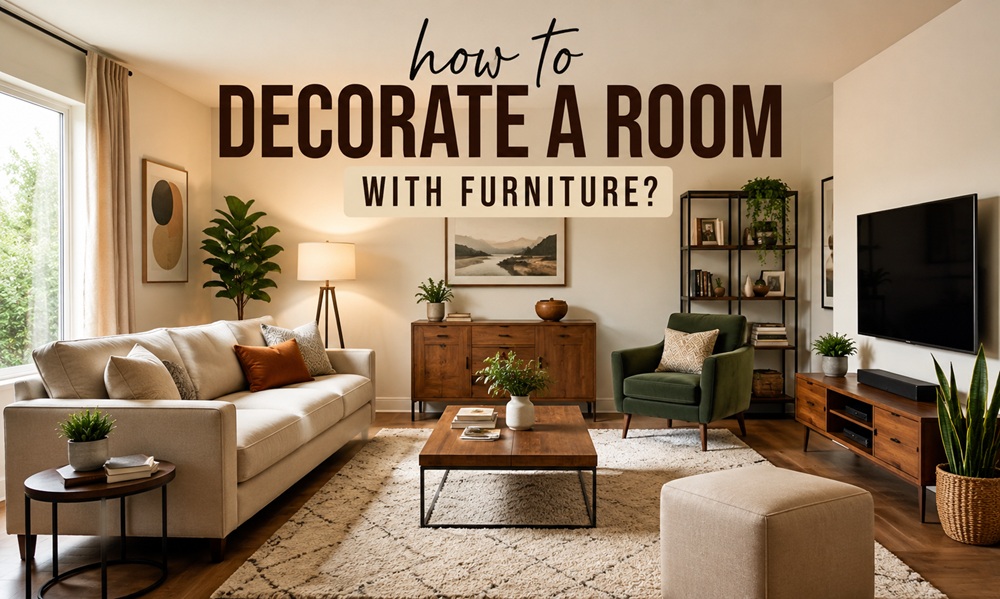
Decorating a room with furniture starts with choosing a focal point, arranging seating or major pieces around it, and leaving enough open space for people to move comfortably. The goal isn’t to fill every wall—it’s to balance scale, function, and flow so the room feels intentional rather than crowded or empty.
If you’re staring at an empty or awkward room wondering where to even start, you’re in good company. Furniture placement is one of the most common sticking points for new homeowners and renters alike.
Beginner Guide: Where Do I Start Decorating a Room?
Start by identifying the room’s focal point—a fireplace, window, or television wall, for example. Arrange your largest furniture piece, like a sofa or bed, in relation to that focal point first. Everything else, including side tables and lighting, should support that main arrangement rather than compete with it.
Understanding Scale and Proportion
A common beginner mistake is choosing furniture that’s too small or too large for the room. A general rule is to leave about 30 to 36 inches of walking space around major furniture pieces. If a sofa looks tiny against a large wall, anchor it with a rug and side tables to fill the visual gap instead of buying an oversized replacement.
How To Create Better Traffic Flow
Walk through the room as if you were a guest. If you have to squeeze between furniture to reach a doorway, the layout needs adjusting. Keep main walking paths at least 30 inches wide, and avoid placing furniture directly in line with doorways, since it creates an immediate visual and physical obstacle.
Common Mistakes When Decorating With Furniture
- Pushing every piece against the wall, which makes rooms feel disconnected and overly formal.
- Ignoring scale, such as pairing a massive sectional with a tiny coffee table.
- Skipping a rug, which leaves furniture groupings feeling like they’re floating separately.
- Overcrowding with too many small pieces instead of fewer, well-chosen ones.
How Much Furniture Is Too Much?
If you can’t walk through the room without turning sideways, or if every wall has a piece of furniture against it, you likely have too much. A good test is to remove one piece and see if the room feels more open without losing function. If it does, that piece probably wasn’t necessary.
Next Steps: Layering in Accessories
Once the major furniture is placed, add layers gradually. Start with a rug to anchor the seating area, then lighting to address dark corners, and finally soft elements like pillows or throws to tie in your existing decor. Avoid adding everything at once—live with the furniture for a few days first to see what the room actually needs.
Decorating With Furniture You Already Own
You don’t need to buy new pieces to improve a room’s layout. Try sliding furniture away from walls to create cozier groupings, or swapping pieces between rooms to see if a different configuration suits the space better. Many rooms improve dramatically just from rearranging what’s already there.
Frequently Asked Questions
Where do I start decorating a room?
Begin with the largest piece of furniture and the room’s natural focal point, like a window or fireplace, then build the rest of the layout around that anchor.
How much furniture is too much?
If walking paths are blocked or every wall is filled, you likely have too much furniture. Remove a piece and see if the room feels more functional.
Should furniture be pushed against the walls?
Not always. Floating furniture slightly away from the wall, especially sofas and chairs, often creates a cozier, more intentional layout than lining everything up against the perimeter.
How do I know if my furniture is the right size for the room?
Leave at least 30 inches of clearance around major pieces. If you constantly bump into furniture, it’s likely too large for the space.
Decorating a room with furniture is less about buying new pieces and more about thoughtful placement. Start with a focal point, respect scale and traffic flow, and layer in accessories gradually, and most rooms will start to feel balanced without a major overhaul.

