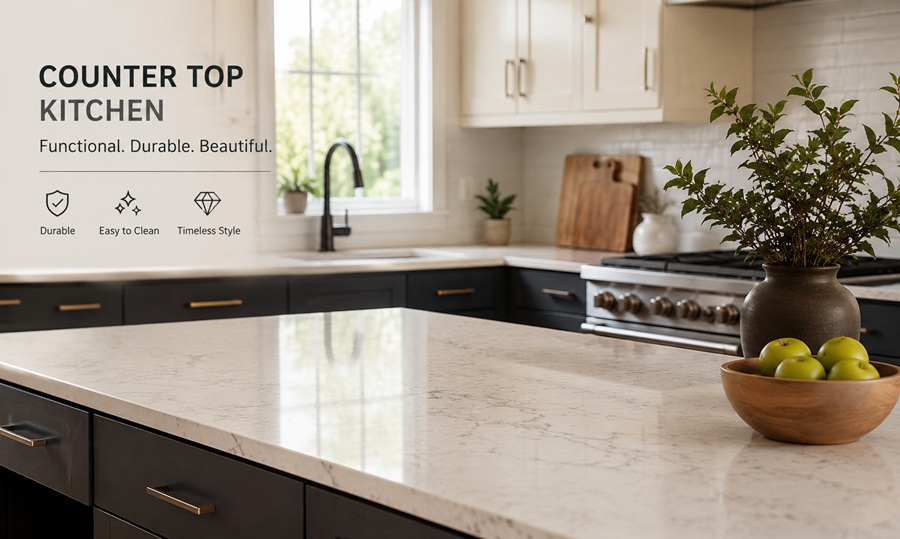
Quartz and granite are the top picks for kitchen countertops when durability matters most, running $50–$150 per square foot installed. Laminate and butcher block cost less, typically $20–$60 per square foot, but need more upkeep or gentler use. The right material depends on how much cooking happens in the kitchen, how much heat and staining it needs to survive, and how much of the budget is left after cabinets and appliances.
Example: Budget Breakdown for a 30 Square Foot Kitchen
A typical kitchen has around 30 square feet of counter space. Here’s how the total material and installation cost compares across the four most common choices:
- Laminate: roughly $600–$1,200 total
- Butcher block: roughly $900–$1,800 total
- Granite: roughly $1,800–$3,600 total
- Quartz: roughly $1,500–$4,500 total
Putting It Together
For a kitchen that sees daily cooking and needs to resist stains without upkeep, quartz is the safer long-term choice despite the higher upfront cost. For homeowners who want a natural stone look and don’t mind annual sealing, granite delivers similar durability at a comparable price. Laminate and butcher block both make sense for rental kitchens, secondary kitchens, or tighter renovation budgets where a 10 to 15 year lifespan is an acceptable tradeoff for the lower cost.
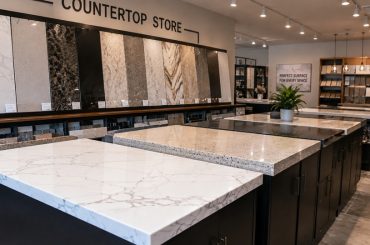
Whichever material ends up on the counter, getting an in-person sample under the kitchen’s actual lighting is worth the extra step — countertop colors and patterns can look noticeably different under showroom lighting than they do at home, and it’s a much cheaper mistake to catch before installation than after.
Installation Timeline and Process
Stone countertops like granite and quartz require templating — a professional measures the exact cabinet layout after cabinets are installed — followed by fabrication at a shop, which typically adds one to three weeks between ordering and installation. Laminate and butcher block have much shorter lead times, often available for installation within days since they don’t require the same custom fabrication process.
Anyone planning a full kitchen renovation should factor this timeline into the overall project schedule, since choosing stone countertops late in the process can hold up final kitchen completion by weeks compared to a laminate or butcher block choice made at the same point.
Matching Countertops to Cabinets and Backsplash
Countertop choice rarely happens in isolation from the rest of the kitchen. Lighter countertops tend to open up a kitchen visually, which matters most in smaller or darker rooms without much natural light, while darker countertops can ground a kitchen with lighter cabinetry and add contrast that reads as more intentional than a monochrome scheme. Pulling one or two veining colors from a granite or quartz slab into the backsplash tile is a common way to tie the whole space together without everything matching exactly.
Frequently Asked Questions
What Is the Most Durable Kitchen Countertop?
Quartz is generally considered the most durable everyday countertop material, since it’s engineered to resist scratches, stains, and chipping without needing regular sealing. Granite is close behind in hardness but is porous and requires sealing every year or two to keep it stain-resistant, while quartz skips that maintenance step entirely.
Is Quartz Better Than Granite?
Quartz tends to win for busy kitchens because it doesn’t need sealing and resists staining from wine, oil, and acidic foods better than unsealed granite. Granite wins on heat resistance and has a natural stone pattern that some homeowners prefer over quartz’s more uniform, engineered look. Neither is objectively better across the board — it comes down to whether low maintenance or a fully natural material matters more.
What’s the Cheapest Countertop That Still Looks Good?
Laminate is the most budget-friendly option that still holds up visually, with modern printed patterns that closely mimic stone or wood at $20–$40 per square foot installed. Butcher block is a close second, offering a warm, real-wood look for $30–$60 per square foot, though it needs regular oiling to resist water damage and staining.
How Long Do Countertops Last?
Granite and quartz countertops typically last 20 to 30 years or more with normal use, often outlasting the kitchen’s next full renovation. Laminate holds up for 10 to 15 years before peeling or chipping becomes noticeable, and butcher block can last a decade or longer if it’s resealed regularly and not exposed to standing water.
Is Marble a Good Kitchen Countertop?
Marble is prized for its classic look but is one of the softer, more porous natural stones, making it prone to etching from acidic foods like lemon juice or wine and staining if spills aren’t wiped up quickly. It works well for bakers who value its naturally cool surface for rolling dough, but it needs more careful daily use and more frequent sealing than granite or quartz to stay looking its best.
How Do You Choose Between These Materials?
Start with how the kitchen actually gets used. A household that cooks daily and wants to skip sealing and careful maintenance is usually better off with quartz. A household that values a fully natural stone and doesn’t mind an annual sealing routine can lean toward granite or marble. Renters, secondary kitchens, or tighter budgets do well with laminate or butcher block, both of which deliver a real style upgrade without the cost of stone.
It also helps to think about resale value if a home sale is on the horizon. Quartz and granite are the two materials buyers most consistently expect in an updated kitchen, and both tend to hold their value better than laminate when it comes time to sell. For a kitchen that will stay as-is for many years regardless of resale, the decision can lean more toward personal preference and daily maintenance tolerance than market expectations.
Is Heat Resistance a Real Concern?
Granite handles direct heat from a hot pan better than any other common countertop material, tolerating brief contact without damage in most cases, though using a trivet is still the safer habit long term. Quartz is more heat-sensitive than granite because of the resin binders used in its manufacturing — sustained direct heat, like a pan left sitting for several minutes, can cause discoloration or cracking, so trivets are effectively required rather than optional with quartz.
Laminate is the most heat-sensitive material on this list and can scorch or bubble from direct contact with a hot pan, making trivets a firm requirement rather than a suggestion. Butcher block sits in the middle — it can handle brief heat exposure but scorches with prolonged contact, and it’s also more vulnerable to knife marks than any of the stone or engineered options, which some cooks actually prefer for a butcher block’s intended use as a cutting surface.