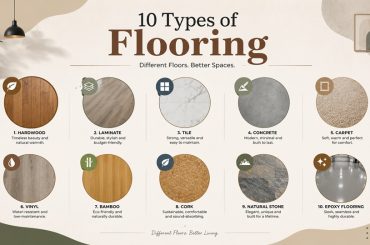

Choosing a flooring material comes down to matching the material’s strengths to your household — pets, kids, allergies, moisture, and how long you plan to stay in the home all point toward different answers. Natural materials like solid wood and stone offer the longest lifespan and best resale value; engineered and synthetic materials like luxury vinyl and laminate trade some of that longevity for better moisture resistance and a lower price. This guide breaks down where each material comes from, how they compare, and which one fits specific lifestyle needs.
Where Flooring Materials Come From
Flooring materials generally fall into three categories. Natural materials — solid hardwood, stone, and cork — are cut or harvested directly from raw material and offer the most authentic look and feel, along with the highest cost and the most sensitivity to moisture and temperature swings.
Engineered materials — engineered hardwood and engineered stone (like quartz used for floors) — combine a thin layer of natural material over a manufactured core, which improves stability in humidity without fully sacrificing the natural look on top.
Synthetic materials — laminate, luxury vinyl plank, and vinyl tile — are manufactured entirely from composite or polymer layers with a printed design layer on top. These are the most water-resistant and budget-friendly options, and modern printing technology has made them visually close to natural materials at a glance.
Comparing Lifespan, Maintenance, and Allergy-Friendliness
Solid hardwood lasts the longest of any common flooring material — 25 to 100 years — and can be refinished multiple times, but it requires the most careful maintenance around moisture and scratching. Engineered hardwood lasts 20 to 30 years and handles basements and humid climates better than solid wood, though it can typically only be refinished once or twice.
Luxury vinyl plank lasts 15 to 25 years, resists water fully, and requires the least maintenance of the group — no sealing, no refinishing, just regular cleaning. Laminate has a similar low-maintenance profile but a shorter lifespan of 10 to 20 years, since its wear layer eventually shows scratches that can’t be sanded out.
For allergy-sensitive households, hard flooring of any type — wood, tile, or vinyl — is preferable to carpet, since carpet fibers trap dust, pet dander, and pollen that hard surfaces don’t hold onto. Cork flooring is worth a specific mention here, since it has natural antimicrobial properties that make it a common pick for allergy-conscious homeowners.
Expert Advice: Matching Material to Lifestyle
Households with pets do best with luxury vinyl plank or engineered hardwood with a scratch-resistant finish, since both hold up better against claws and accidents than solid hardwood or laminate. Households with young kids benefit from the same water resistance, plus a softer underfoot feel — cork or a thicker vinyl product both add cushioning that hard tile doesn’t.
For resale value, solid or engineered hardwood remains the material buyers respond to most positively, particularly in living rooms, bedrooms, and hallways. In kitchens and bathrooms, tile or waterproof vinyl typically wins over hardwood even for resale purposes, since buyers expect water-resistant flooring in wet areas regardless of the material used elsewhere in the home.
Sustainability Considerations
For homeowners weighing environmental impact alongside performance, bamboo and cork stand out as the most sustainable common flooring materials, since both regenerate far faster than hardwood trees and are harvested without killing the plant. Reclaimed hardwood is another strong option for sustainability-minded buyers, offering the durability of solid wood while reusing material that’s already been milled rather than requiring new lumber.
Vinyl and laminate, while practical and affordable, are the least sustainable of the common options since they’re petroleum-based products that aren’t biodegradable at end of life. Several manufacturers now offer recycled-content vinyl and laminate lines, which narrow that gap somewhat for buyers who want the practicality of synthetic flooring without ignoring the environmental tradeoff entirely.
Underfoot Comfort and Sound
Comfort underfoot is easy to overlook when comparing flooring materials on paper, but it makes a real difference in daily living. Carpet remains the softest and warmest option, which is why it still holds appeal in bedrooms despite its shorter lifespan and allergen concerns. Cork offers a natural cushioning that few people expect from a hard flooring material, making it a favorite for home offices or kitchens where someone stands for long stretches.
Tile and stone are the hardest and coldest underfoot, which is part of why they’re typically reserved for kitchens and bathrooms rather than living rooms or bedrooms. Hardwood and laminate sit in the middle — firmer than carpet but warmer and quieter than tile, especially when installed over an underlayment designed to dampen sound and add a small amount of cushioning.
For multi-story homes, sound transfer between floors is worth factoring in as well. Carpet and cork both absorb footstep noise noticeably better than hardwood, tile, or laminate, which is why many condo and apartment buildings require sound-dampening underlayment beneath hard flooring on upper floors, regardless of which specific material is chosen.
Mixing Materials Between Rooms
Few homes use a single flooring material throughout, and that’s usually the right call rather than a compromise. A common approach pairs hardwood or engineered hardwood in main living spaces and bedrooms with tile or waterproof vinyl in kitchens, bathrooms, and entryways, giving each room the material best suited to how it’s actually used. The key to making mixed flooring feel intentional rather than mismatched is keeping a consistent tone or undertone across the different materials, so the transition between rooms feels like a natural shift rather than an abrupt change.
Frequently Asked Questions
What Flooring Material Lasts the Longest?
Solid hardwood and natural stone tile both offer the longest realistic lifespans, often exceeding 50 years with proper care, since both can be refinished or repaired repeatedly rather than replaced. Porcelain tile is close behind and requires even less maintenance to hit a similarly long lifespan.
Is Vinyl Flooring Good for Pets?
Luxury vinyl plank is one of the best flooring materials for homes with pets, since it’s fully waterproof, resists scratching better than laminate, and doesn’t dent as easily as solid hardwood under claws or dropped water bowls. It also tends to be quieter underfoot than tile, which matters in homes with larger dogs.