
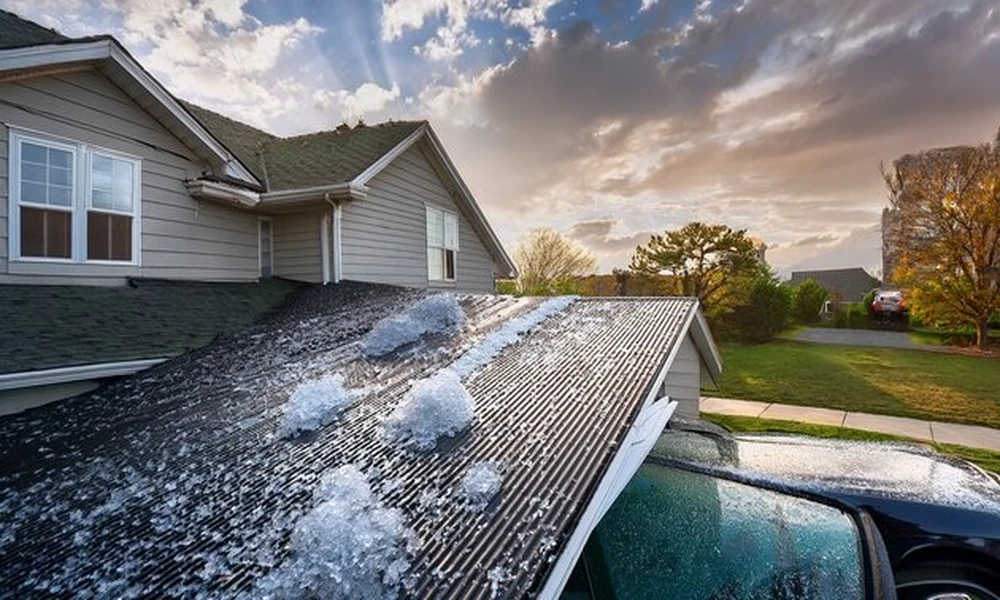
Storms in this part of Nebraska do not knock politely. One minute the sky turns a strange green, the next you are standing at the window listening to ice hammer the roof and wondering what the morning will show. Plenty of homeowners in Omaha, Papillion and Bellevue end up searching for a crew like Monarch Siding, Windows & Roofing Inc once the clouds clear, but the smartest first move happens before any phone call. It is a slow walk around your own house with a camera in your hand.
Start low, where the evidence piles up
Before you look up at anything, look down. Check the lawn, the flower beds and the spots under each downspout. Loose granules from asphalt shingles, chips of paint and fragments of trim all collect near the base of the house, and they tell you something happened overhead.
Then find the soft metal. Gutters, downspouts, vent caps, the fins on an air conditioner and even the mailbox are honest witnesses because they dent easily and show every hit. If those items are covered in dimples, the ice was large enough to matter, and your roof, siding and windows deserve a closer look. Hail also tends to fall at an angle, so one side of the house often takes the worst of it while the opposite side looks untouched.
Siding tells its story in small marks
Siding rarely fails in a dramatic way after hail. It fails in small ways that are easy to miss from the driveway. Here is what to look for, depending on what your walls are made of.
- Round cracks or punched holes in vinyl, often with sharp edges
- Chips, pits or bruised corners on fiber cement panels
- Dents and dimples in aluminum or steel
- Splits, dark wet patches or soft spots on wood and engineered wood
- Dings along trim, fascia, soffits and corner boards
Try looking at each wall in the early morning or near sunset. Low, angled light throws shadows into tiny dents that disappear at noon. Cold weather also matters, because vinyl turns brittle in the cold and cracks more easily when it is struck. A long hairline crack running along a seam is usually age or movement, while a short crescent shaped break with a clear impact point is far more likely to be hail.
One more thing worth knowing is that matching is a real problem. Vinyl fades over the years, and older colors or profiles are sometimes discontinued. A repair that looked simple can turn into a conversation about replacing a whole wall so the finished house looks even.
Windows keep secrets behind the glass
A cracked pane is easy to spot. The quieter damage is what makes people regret skipping the inspection. Look closely at the frames, the exterior trim and the screens, which often take direct hits and bend or tear. Then look at the glass itself from inside and outside.
The biggest hidden problem is a failed seal on a double pane unit. Hail can stress the edges of the glass without breaking it, and weeks later a hazy film or tiny water droplets show up between the panes. That fog cannot be wiped away because it sits inside the sealed space. Open and close every window, test the locks and check the sills after the next rainfall for new stains.
The roof is the part you cannot judge from the lawn
Please stay off the ladder. A wet roof is slippery, hail strewn granules act like marbles and a fall causes far more harm than any shingle. From the ground, use binoculars to scan for dark bare spots where granules were knocked loose, scattered missing shingles, damaged ridge caps and bent flashing around chimneys and vents.
Inside the house, take a flashlight into the attic. Look for damp insulation, water stains on the underside of the decking and any small points of daylight. Ceiling spots in upstairs rooms are another signal. Be aware that hail bruising often does not leak right away. The mat under the granules may be cracked, and the first sign of trouble can arrive with a spring rain months later.
If something is clearly open to the weather, covering it with a tarp is reasonable and expected.
The paperwork that protects you
Insurance claims go better when the story is organized from the first day. The Nebraska Department of Insurance has a short storm recovery notice for residents that covers the essentials, and its advice lines up with what most adjusters appreciate.
- Photograph and film every damaged area, then list damaged belongings
- Contact your insurance company soon and keep notes on every call
- Ask whether your policy covers living costs if you cannot stay in the house
- Get more than one written estimate before you sign anything
Be careful with strangers at the door. Out of town crews tend to arrive right after a big storm, and some of them are not licensed or insured. The state advice is simple. Work with licensed and insured contractors, never pay the full bill in advance and keep every agreement in writing.
Choosing who climbs your ladder
It helps to ask a few plain questions. Does the company have a local address you can visit? Can they handle siding, windows and roofing together? That last point is more important than it sounds, because water finds its way in at the places where those materials meet, such as the flashing around a window or the edge where a roof meets a wall. When one team owns all three, nobody can point at someone else after a leak.
One local option is a contractor based in Papillion with a showroom on East Cary Street. Its crews install vinyl, LP SmartSide and James Hardie siding, windows from Pella, Marvin and Heartland, name brand roofing, entry doors and gutters. The company offers free estimates and an online visualizer for previewing colors, and it works across the metro from Council Bluffs and Bellevue to Gretna and Lincoln. You can reach the office at (402) 596-1414.
Small habits that make the next storm easier
Nobody can prevent hail, but a few quiet habits shrink the damage. Clear gutters each spring and fall so water does not back up under the shingles. Trim branches that hang over the roof, since a falling limb can finish what hail started. Walk the house every year and take a set of dated photos in good light, because a clear record of how things looked before a storm makes any later claim far easier to prove.
If you are replacing a roof anyway, ask about impact resistant shingles, which are rated to take a beating from ice. Check the caulk around windows and trim once a year as well, because small gaps grow quietly. A house that is looked at often is a house that gets fewer surprises, and the next green sky becomes less of a worry and more of a weather report.