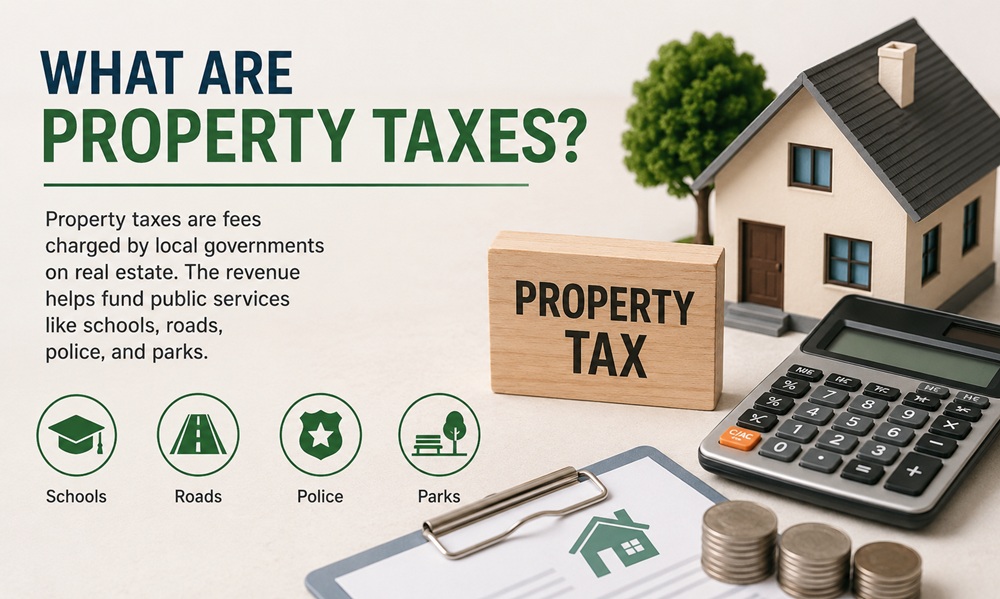
Property taxes are annual payments homeowners make to their local government, based on the assessed value of their land and buildings. In the United States, a local assessor sets your property’s assessed value, and your county or city applies a tax rate, called a mill rate, to determine what you owe. The money typically funds public schools, police and fire departments, road maintenance, and other local services. Rates vary widely by state and county, and most homeowners pay through an escrow account bundled into their monthly mortgage payment.
Questions Homeowners Commonly Ask About Property Taxes
What Are Property Taxes Used For?
Property tax revenue funds local government operations, including public schools, road repairs, libraries, parks, and emergency services like police and fire departments. Because these taxes stay local, the exact breakdown of how funds are spent varies by county and school district.
How Are Property Taxes Calculated?
Your local assessor determines your property’s assessed value, which may differ from its market value. That figure is multiplied by your local mill rate, expressed as dollars owed per $1,000 of assessed value. Some states apply exemptions for primary residences, seniors, or veterans that reduce the taxable amount before the rate is applied.
Who Has to Pay Property Taxes?
Anyone who owns real estate, including land, homes, and commercial buildings, is responsible for property taxes. Renters don’t pay them directly, though landlords typically factor tax costs into rent pricing.
Can Property Taxes Change Over Time?
Yes. Property taxes can rise or fall based on reassessments, local budget needs, or voter-approved measures like school bonds. Home improvements that increase assessed value, such as additions or major renovations, can also raise your tax bill.
A Sample Property Tax Calculation
Here’s a simplified example using a home assessed at $300,000 in a county with a 1.2% effective tax rate.
| Item | Amount |
| Assessed Home Value | $300,000 |
| Effective Tax Rate | 1.2% |
| Estimated Annual Property Tax | $3,600 |
| Estimated Monthly Escrow Portion | $300 |
Effective rates vary significantly across the country. States like New Jersey and Illinois tend to have higher average rates, while states like Hawaii and Alabama are typically lower. Checking your specific county assessor’s website gives the most accurate figure for your area.
How Do You Check or Appeal Your Property Tax Assessment?
Most county assessor websites allow homeowners to look up their current assessed value online. If you believe the assessment is inaccurate, most jurisdictions offer a formal appeal process, often requiring comparable sales data or an independent appraisal to support your case. Appeals typically have a filing deadline shortly after assessment notices go out each year.
Frequently Asked Questions
Are Property Taxes Tax-Deductible?
In many cases, yes. Homeowners who itemize deductions can typically deduct property taxes, though federal law caps the combined state and local tax deduction at $10,000 for the tax year. Check current IRS guidelines or consult a tax professional for your specific situation.
What Happens If You Don’t Pay Property Taxes?
Unpaid property taxes accrue penalties and interest, and prolonged nonpayment can eventually lead to a tax lien or foreclosure. Most counties offer payment plans, so contacting the local tax office early is the best way to avoid serious consequences.


