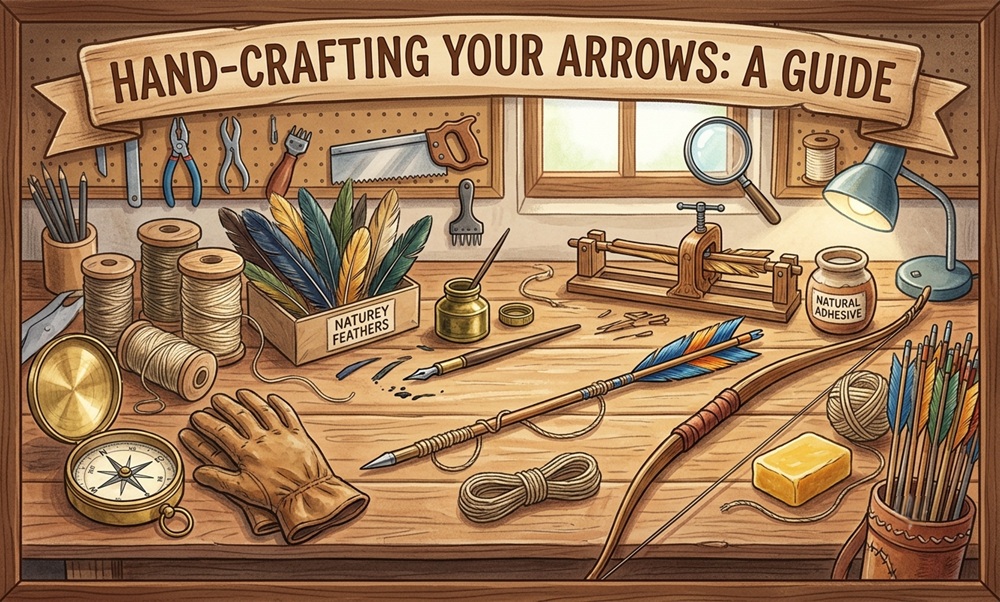
Fletching is the process of attaching feathers or plastic vanes to an arrow shaft to stabilize its flight. Doing it yourself at home takes about 15–20 minutes per arrow once you have the right tools, and it costs a fraction of buying pre-fletched arrows. Archers fletch their own arrows to customize colors, match spine and weight precisely, or simply because it’s part of the hobby they enjoy.
Beginner Guide: What You Need to Get Started
- A fletching jig (clamps the shaft and holds vanes at the correct angle)
- Vanes or feathers (plastic vanes are more durable and beginner-friendly; feathers are lighter and traditional)
- Fletching glue or fletching tape
- Arrow shafts with nocks already installed
- Isopropyl alcohol and a rag, for cleaning the shaft before gluing
A basic jig costs $20–$40 and works for dozens of arrows, so the upfront cost pays off quickly if you shoot regularly.
Step-by-Step: Fletching an Arrow
- Clean the shaft where the vane will sit using isopropyl alcohol — any oil or dust will weaken the glue bond.
- Load the shaft into the jig, aligning the nock with the jig’s index point.
- Place a vane into the jig’s clamp.
- Apply a thin, even line of glue along the base of the vane.
- Press the vane onto the shaft using the jig, holding for the time specified on the glue (usually 30–60 seconds).
- Rotate the shaft to the next position and repeat for the remaining two or three vanes.
- Let the glue cure fully — usually a few hours — before handling the arrow for shooting.
What Is the Difference Between Feathers and Vanes?
Feathers are lighter and flex on contact with the arrow rest, making them common for traditional archery. Vanes are plastic, more durable in wet weather, and slightly heavier, which suits compound bow shooters who want consistency across many shots. Beginners often start with vanes simply because they’re more forgiving of small application errors.
Should You Use a Straight, Offset, or Helical Fletch?
Straight fletching creates the least wind resistance and suits target shooting where speed matters. Offset and helical fletching add spin to the arrow, improving stability, which is why bowhunters often prefer them for accuracy over longer or less predictable shots. Helical fletching is the most stabilizing but does slightly reduce arrow speed.
Common Mistakes to Avoid
Using too much glue is one of the most frequent errors — excess glue seeps out from under the vane and creates an uneven surface that affects flight. Rushing the clamp time is another, since vanes that haven’t fully bonded can peel off mid-flight. Skipping the alcohol cleaning step also weakens the bond, even if the glue looks like it’s holding at first.
Misaligning the nock with the vanes is a subtler mistake. If the cock vane (the differently colored one) isn’t correctly indexed against the bowstring, it can clip the arrow rest on release and throw off accuracy.
Next Steps After Fletching
Once your arrows are fletched and fully cured, test them at a short distance first. Watch for wobble or inconsistent grouping, which can indicate a fletching or spine-matching issue rather than a shooting error. If arrows group well, gradually move back to your normal shooting distance.
Consider fletching a small test batch of two or three arrows before committing to a full dozen, especially if you’re trying a new vane angle or brand for the first time.
Frequently Asked Questions
How long does fletching glue take to fully cure?
Most fletching glues set enough to handle within a minute but need several hours, sometimes overnight, to reach full strength. Check the product label for exact times.
Should I choose feathers or vanes as a beginner?
Vanes are generally easier for beginners since they’re more forgiving of small clamping errors and hold up better if you’re learning outdoors in variable weather.
Can I re-fletch an arrow that’s already been used?
Yes. Remove old vanes with a vane puller or heat gun, clean the shaft thoroughly with alcohol, and follow the same fletching process as a new arrow.
Do I need a fletching jig, or can I do it by hand?
A jig is strongly recommended for consistent results. Fletching by hand is possible but makes it much harder to align vanes evenly across multiple arrows.
Fletching your own arrows is one of the most practical skills an archer can learn. Once you’ve built a few sets, you’ll likely find it faster and more satisfying than buying pre-made arrows off the shelf.