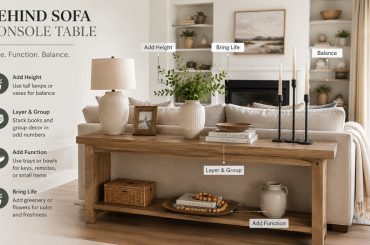

Home accents are the smaller decorative details — pillows, vases, art, lighting, and textiles — that finish a room without requiring new furniture or paint. Swapping out a handful of accents is one of the fastest, cheapest ways to change how a room feels, often for under $200 and in an afternoon. Here’s what that looks like in practice, using a real living room refresh as an example.
Case Example: A Living Room Refresh Using Only Accents
A common scenario: a living room with a neutral sofa, beige walls, and furniture that’s still in good shape but the room feels flat and dated. Instead of replacing the sofa or repainting, the fix was entirely in the accents. Two new throw pillows in a rust and cream pattern replaced faded solid-color ones. A ceramic vase with dried pampas grass went on the console table, replacing an empty corner. A large piece of abstract wall art went above the sofa where a small, oddly-sized frame used to hang. A woven throw blanket got draped over the arm of the chair, and the overhead lighting got supplemented with a warm-toned floor lamp in the corner.
None of this involved new furniture. The total cost was under $180, and the visual difference was immediate — the room read as intentional and current instead of just “lived in.”
Lessons Learned
A few things stood out from this kind of refresh. Color repetition matters more than variety — pulling the same rust tone from the pillows into the vase and one accent in the art created a cohesive look, rather than five unrelated colors competing for attention. Texture mixing filled in the gaps that color alone couldn’t; the woven throw and the ceramic vase added tactile variety that a flat room was missing.
The biggest misstep to avoid is overcrowding. The first attempt at this refresh included too many small objects on the console table, and it read as cluttered rather than styled. Removing about half of them, and leaving intentional negative space, made the remaining pieces stand out instead of competing with each other.
Recommendations: Six Accent Categories to Shop First
For anyone starting a similar refresh, these six categories deliver the most visible change for the least cost.
- Throw pillows — the fastest, cheapest color and pattern update in any room.
- A statement vase — even without flowers, a well-shaped vase anchors a shelf or table.
- Wall art — one larger piece has more impact than several small mismatched frames.
- Accent lighting — a floor or table lamp adds warmth that overhead lighting can’t.
- A throw blanket or textured rug — introduces texture without committing to new furniture.
- A tray or bowl for a coffee table — corrals clutter while adding a finished, styled look.
Seasonal Accent Swaps
One of the advantages of building a room around accents rather than large furniture is how easy it becomes to refresh for the seasons. Swapping a set of pillow covers, changing a throw blanket, or rotating a vase’s contents from fresh flowers in spring to dried branches in winter keeps a room feeling current without any real cost or effort. Storing off-season accents in a bin or closet, rather than buying entirely new sets each time, keeps this habit affordable long term.
Lighting is another easy seasonal lever — a warmer bulb temperature or an additional lamp in the darker winter months changes the entire feel of a room without touching a single piece of furniture.
Budgeting for an Accent Refresh
A full accent refresh across a living room typically runs $100 to $300 depending on quality and how many categories get touched — pillows and a throw blanket on the lower end, adding a lamp or a larger art piece on the higher end. Thrift stores, marketplace listings, and end-of-season sales are worth checking before buying new, especially for vases, frames, and decorative bowls, since these items rarely need to be brand new to look good.
Spacing out purchases over a few weeks rather than buying everything in one trip also tends to produce a better result — it gives more time to see how each new piece works with what’s already in the room before adding the next one.
Accents for Small Apartments and Rentals
Renters and small-space dwellers can lean on accents even more heavily than homeowners, since paint and permanent fixtures are often off the table entirely. Removable wallpaper panels, framed prints leaned against a wall rather than hung, and free-standing floor mirrors all add personality without violating a lease agreement, and all fall under the same accent-first approach used in the living room example above.
Command-strip picture hangers and adhesive hooks have made it far easier to add wall art and lighting without drilling, which used to be one of the biggest limitations for renters trying to personalize a space through accents alone.
Accents That Add Function, Not Just Style
The best accent pieces often do double duty. A decorative tray on a coffee table looks styled but also corrals remotes and coasters that would otherwise clutter the surface. A woven basket beside a reading chair holds blankets or magazines while adding texture. A tiered stand on a kitchen counter organizes fruit while acting as a decorative centerpiece. Choosing accents that solve a small everyday storage or organization problem, rather than purely decorative objects, tends to produce a room that feels both styled and genuinely lived-in.
Frequently Asked Questions
What Are Good Home Accent Colors?
The safest approach is picking one or two accent colors that repeat across at least three items in the room — a pillow, a vase, and a piece of art, for example. Warm neutrals like rust, terracotta, and olive pair well with most existing color schemes, while a single bold color used sparingly reads as a deliberate accent rather than a mismatch.
How Many Accent Pieces Per Room?
A general guideline is three to five accent pieces per main surface — a console table, a coffee table, or a shelf — rather than filling every available inch. Fewer, more intentional pieces almost always read better than a large number of small trinkets.