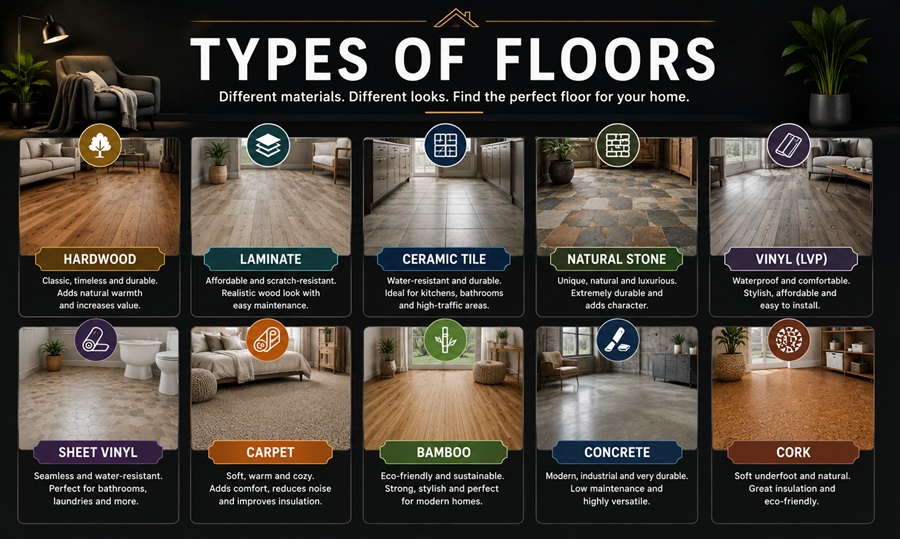
The five most common types of flooring for U.S. homes are solid hardwood, engineered hardwood, laminate, vinyl (including luxury vinyl plank), and tile, ranging from about $2 to $15 per square foot installed. Hardwood offers the longest lifespan and best resale value; vinyl and laminate cost less and handle moisture better; tile holds up best in wet rooms. The right choice depends less on which floor looks best and more on where it’s going and how much wear it needs to survive.
Below is a straightforward cost and durability breakdown for each type, followed by recommendations by room.
Cost Breakdown by Flooring Type
Prices below are national averages for materials plus standard installation, and they shift based on region, subfloor condition, and the specific product line chosen.
- Solid hardwood: $8–$15 per square foot installed. Highest upfront cost, but it can be sanded and refinished multiple times over decades.
- Engineered hardwood: $6–$12 per square foot installed. Real wood veneer over a plywood core, more stable in humidity than solid hardwood.
- Laminate: $3–$8 per square foot installed. A printed wear layer over a composite core; looks like wood or stone at a fraction of the price.
- Vinyl / luxury vinyl plank (LVP): $2–$7 per square foot installed. Fully waterproof in most product lines, softer underfoot than tile or hardwood.
- Tile (ceramic or porcelain): $5–$14 per square foot installed. Labor is the biggest cost driver here, since tile setting is more time-intensive than click-lock floors.
- Carpet: $2–$8 per square foot installed. Cheapest upfront in most grades, but has the shortest realistic lifespan of the group.
Comparing Durability and Water Resistance
Solid hardwood lasts 25 to 100 years with proper care but is damaged by standing water and deep scratches from pets. Engineered hardwood handles humidity swings better than solid wood, which makes it a safer choice for basements or homes without strict climate control, though it still isn’t fully waterproof.
Laminate resists scratches well thanks to its hard wear layer, but water that sits at the seams for more than a few hours can cause swelling. Vinyl plank is the most water-tolerant option on this list outside of tile — most LVP products are rated fully waterproof and can go in bathrooms, laundry rooms, and basements without issue.
Tile is essentially impervious to water and is the most durable option against scratches and heat, though grout lines need periodic resealing to stay stain-resistant. Carpet is the least durable against both moisture and wear, typically needing replacement every 5 to 15 years depending on foot traffic and carpet grade.
Recommendations by Room
Kitchens and bathrooms do best with tile or waterproof vinyl plank, since both shrug off spills, splashes, and the occasional flood from a dishwasher or toilet. Basements should stick to engineered hardwood, laminate rated for below-grade use, or vinyl — solid hardwood and carpet are both risky in a space prone to moisture.
Bedrooms and living rooms have more flexibility since they see less water exposure; solid or engineered hardwood adds resale value here, while laminate or LVP deliver a similar look for less money. High-traffic entryways benefit from tile or LVP over hardwood, since both resist the scuffing and grit that shoes track in daily.
Installation: What Adds to the Cost
The cost ranges above assume a straightforward installation over a subfloor in reasonably good condition, but a few factors push the price higher. Removing old flooring — especially tile or glued-down carpet — adds labor cost that a simple click-lock installation over an existing floor wouldn’t require. A subfloor that’s uneven, damaged, or not level enough for the new material often needs leveling compound or plywood underlayment before installation can start, which is a common surprise cost in older homes.
Stairs and irregular room shapes also raise the price per square foot compared to a simple rectangular room, since cutting material to fit takes more time regardless of the flooring type. Getting a written estimate that separates material cost from labor makes it much easier to compare quotes between flooring types and installers.
How Long Each Type Takes to Install
Click-lock products — laminate and most LVP — are the fastest to install, and a moderately sized room can often be finished in a single day by an experienced installer, or a weekend for a confident DIYer. Tile takes considerably longer because of setting time and grout curing, often stretching a similarly sized room into a two- to three-day job. Solid hardwood installation timelines vary the most, since site-finished hardwood needs additional days for sanding, staining, and sealing after the boards go down, while prefinished hardwood installs closer to laminate’s timeline.
Choosing Based on Climate
Climate plays a bigger role in flooring choice than many homeowners initially consider. In humid regions or homes without consistent climate control, solid hardwood is more prone to expanding and contracting with seasonal humidity swings, sometimes causing gaps or warping over several years. Engineered hardwood, laminate, and vinyl all handle these fluctuations better, making them more reliable choices in humid climates or homes near the coast.
In consistently dry climates, solid hardwood performs closer to its ideal conditions and is a safer long-term investment, since the wood is less likely to react to humidity extremes in either direction. For homes that experience both — hot, humid summers and dry winters with heating running constantly — engineered hardwood tends to be the more forgiving middle-ground choice over solid wood.
Frequently Asked Questions
What Is the Most Durable Flooring?
Porcelain tile is the most durable flooring option for most homes, resisting scratches, heat, and water better than wood, laminate, or vinyl. Solid hardwood comes close in longevity since it can be refinished repeatedly, but it’s more vulnerable to water damage and deep scratches than tile.
What’s the Cheapest Flooring That Still Looks Good?
Laminate and vinyl plank are the cheapest options that still hold up visually, often running $3–$7 per square foot installed while closely mimicking the look of hardwood or stone. Higher-end laminate and LVP lines use embossed textures that mirror real wood grain, so the visual gap between these budget options and hardwood has narrowed significantly in recent years.
Is Vinyl Flooring Good for Pets?
Vinyl plank is one of the best flooring choices for homes with pets, since it’s fully waterproof in most product lines, resists scratching noticeably better than laminate, and doesn’t dent as easily as solid hardwood under claws or a dropped water bowl. Its softer, slightly cushioned surface is also quieter underfoot than tile, which matters for households with larger dogs or multiple pets moving around the house throughout the day.
Hardwood can still work for pet owners, but it requires a harder finish and more diligent nail trimming to avoid scratches over time, and even then it’s more vulnerable to accidents than a fully waterproof surface. For multi-pet households or homes with larger breeds, vinyl plank or tile remain the safer long-term investment.