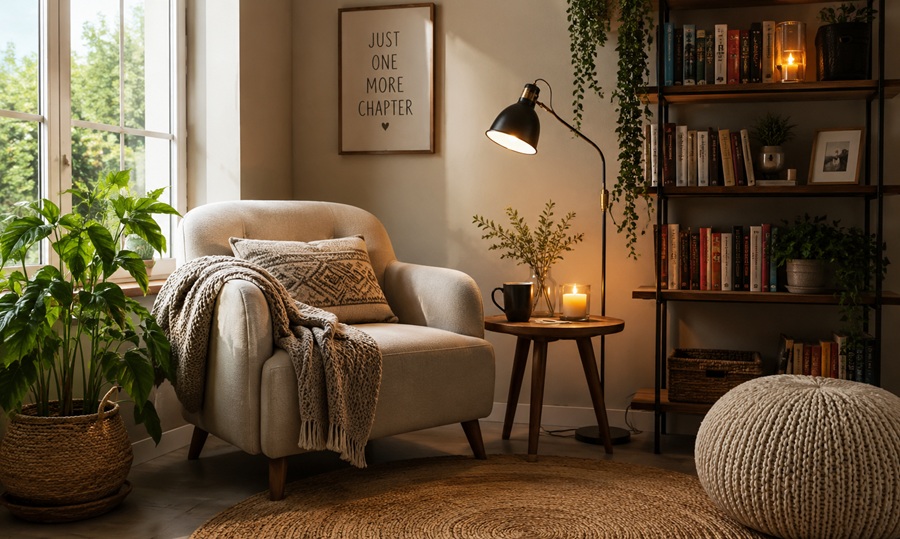
A good reading corner needs three things: a comfortable seat, light that doesn’t strain your eyes, and just enough separation from the rest of the room to feel like its own space. You don’t need a spare room or a bay window to pull this off. A reading corner can fit into a 4-by-4-foot patch of an apartment, a bedroom, or even a wide hallway landing, as long as those three basics are covered.
Most people who try to build a reading nook get one part right and skip the other two — they buy a beautiful chair but light it with an overhead fixture that casts a shadow right over the page, or they pick a gorgeous spot by a window that gets too cold in winter to sit in for more than ten minutes. This guide walks through the setup step by step, the mistakes that trip people up most often, and what to do next once the basics are in place.
Starting From Scratch: The Beginner Setup
Pick your spot first, before you buy anything. Walk your home at the time of day you actually read — evening for most people — and look for a corner that isn’t a main walkway. A dead corner near a window, the end of a hallway, or an unused nook beside a bookshelf all work. The spot doesn’t need natural light to be great, but it helps.
Seating comes next, and it matters more than people expect. A reading chair should let your feet touch the ground or rest on a footstool, support your lower back without you having to think about it, and have arms if you tend to hold a book or e-reader for long stretches. An armchair, a slipper chair, or even a firm floor cushion with back support against a wall all count — the price tag isn’t the deciding factor, the support is.
Lighting is the piece most people get wrong because they rely on whatever light is already in the room. A dedicated reading lamp should sit slightly behind and above your shoulder, at a height where the light falls on the page and not into your eyes. A floor lamp with an adjustable arm or a table lamp on a side table both work well; ceiling lights alone almost never do, since they cast your own shadow over the book.
Storage keeps the corner from turning into clutter. A small side table, a stack of floating shelves, or a woven basket next to the chair gives your current stack of books a home without taking over the room.
Common Mistakes That Kill a Reading Corner
The most common mistake is oversizing the furniture. A reading corner is meant to feel enclosed and personal, and an oversized armchair or a chaise that eats up half the room does the opposite — it turns a cozy nook into a furniture obstacle. Measure the space before buying, and lean toward a chair that’s proportional to the corner rather than the biggest one that will physically fit.
The second mistake is lighting placement. Overhead light, or a lamp placed directly in front of you, creates glare and shadow instead of even illumination. Test the lamp in the exact spot you plan to sit before committing to it — glare is much easier to spot in person than in a store display.
The third mistake is ignoring foot traffic. A reading corner set up in a path people walk through constantly never gets used, because it’s never actually peaceful. Even a slight offset from the main walkway, or a rug that visually separates the space, makes a noticeable difference in how often the spot gets used.
Next Steps: Three Starter Layouts
Once the basics are in place, here are three layouts that work well depending on how much room you have.
- Small apartment (no spare corner): a slipper chair angled into the room’s least-trafficked corner, a clip-on lamp attached to a shelf, and a small stool doubling as a side table.
- Bedroom nook: an armchair placed under or beside a window, paired with a floor lamp and a low bookshelf within arm’s reach.
- Hallway landing or stair nook: a built-in bench cushion or a single compact chair, wall-mounted sconce lighting to save floor space, and a floating shelf for the current read and a mug.
Adding a Rug to Anchor the Space
A rug isn’t required, but it does more work than most people expect. Placing even a small area rug under the chair and footstool visually separates the reading corner from the rest of the room, especially in an open-plan space where there’s no wall or furniture line to mark the boundary. A rug roughly 3-by-5 feet is usually enough to define a single-chair setup without overwhelming a small room.
Texture matters here too — a slightly plush or woven rug adds warmth underfoot, which matters if the corner sits on hardwood or tile flooring that can feel cold during longer reading sessions in cooler months.
Personal Touches That Make the Corner Feel Used
The difference between a reading corner that looks staged and one that actually gets used every day usually comes down to a few personal touches. A soft throw blanket draped over the arm of the chair signals that the spot is meant for settling in, not just for photos. A small tray or coaster nearby for tea or coffee keeps the side table from collecting rings and clutter.
Plants are worth adding if the corner gets any natural light at all — even a single low-maintenance plant like a pothos or snake plant softens the space and makes it feel more like a retreat than a leftover corner. None of these additions are required to make a reading corner functional, but they’re usually what turns a good setup into one that gets used every single day.
Frequently Asked Questions
What Is the Best Chair for a Reading Corner?
The best reading chair supports your back and lets your feet rest flat on the floor or a footstool, with arms to prop up a book or e-reader for long sessions. Slipper chairs, wingback chairs, and firm armchairs all work well; the key is testing the chair for at least ten minutes before buying, since discomfort that isn’t obvious after thirty seconds often shows up after twenty minutes of reading.
How Much Space Do You Need for a Reading Corner?
A functional reading corner can fit in as little as 16 square feet — roughly a 4-by-4-foot area. That’s enough for a chair, a small side table, and a lamp, with a little room to pull a footstool close. Larger spaces allow for a bookshelf or a rug to anchor the area, but they aren’t required for the corner to feel finished.